defi ·
Hayes details FLOP derivatives vision, futures, perpetual swaps for AI compute
Arthur Hayes has put forth a design for a derivatives market concerning Flop Network, positing that its native token could enable AI computation to be treated as a tradable asset.
2 outlets · CoinTelegraph · cryptopotato.com
The framework for futures and perpetual swaps, tied to Flop Network's envisioned compute market, was detailed by Hayes in a new essay published on October 27. This market would allow AI agents to compensate for computational power using FLOP. The objective of this endeavor is to establish a standard valuation for compute that financial instruments can reference, allowing traders to construct contracts around the resources utilized by artificial intelligence systems.
Hayes, in a post on X, titled his essay "The Trifecta," presenting it as a structural guide for innovators aiming to create derivatives within the economy of AI agents. His core concept rests on the premise that a liquid market for computing power could furnish the necessary pricing benchmark for perpetual swaps and futures. The proposed Flop Reference Compute Rate (FRCR) would be determined hourly, utilizing a volume-weighted FLOP price per GigaFLOP of available computing capacity. Contracts for quarterly futures would mature on the final Friday of March, June, September, and December, with margins and profits denominated in US dollars.
Hayes elaborated that because the underlying compute market would be priced in FLOP, the dollar-based structure necessitates a quanto derivative. This is a contract whose settlement value is in a different currency than the asset it tracks. Consequently, to price the contract, an adjustment must account for the relationship between the FRCR and the FLOP-to-dollar exchange rate. For the perpetual swap, funding payments would be calculated based on an eight-hour time-weighted average of the divergence between its trading price and the FRCR. Similar to cryptocurrency perpetuals, those holding the more expensive side of the contract would remit payments to those on the cheaper side, depending on the premium. Market participants could establish futures exposure by either acquiring or providing Flop Compute Units (FCUs), which signify reserved inference capacity for a specific AI model and a defined delivery timeframe. Furthermore, Hayes's structure mandates that suppliers must secure FLOP bonds, which they risk forfeiting should they fail to deliver the agreed-upon computational work.
The viability of this derivatives proposition hinges upon Flop Network first successfully establishing a functional spot market. Hayes contends that current indexes monitoring chip rental costs and individual AI token valuations offer incomplete data, as both are ultimately derivative of the fundamental cost of computation. Within his design, network blocks would log inference tasks, the computational work accomplished, and the associated fees paid to miners. These records would assist in calculating the exchange rate between FLOP and computing capacity, thereby providing buyers and suppliers with a common point of reference.
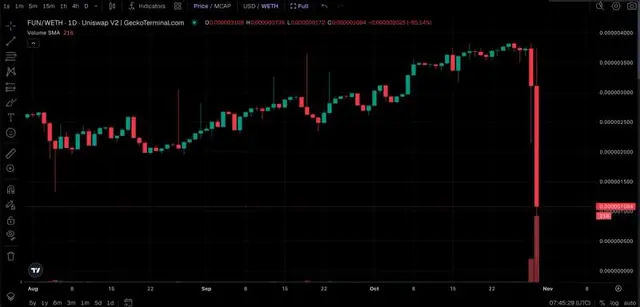
The project introduced Flop Labs in August 2026, where its intended native token, FLOP, was described as "food for your AI agent." In an August 27 communication, the initiative asserted that autonomous agents require funds directly convertible into computing resources, rather than relying on payment mechanisms primarily structured for human and corporate entities. The initial dissemination of the post detailing Arthur Hayes Plans to Build Derivatives Around AI Compute occurred on CryptoPotato.
This development suggests a maturation in how decentralized finance protocols are attempting to integrate real-world, resource-based economic activities, moving beyond purely digital asset exchange into the commoditization of essential computational infrastructure.
Why it matters
This proposal attempts to create a tradable commodity for AI compute, moving beyond simple token valuation. The reliance on a foundational spot market and complex derivative structures touches on advanced DeFi primitives being applied to infrastructure needs. Readers should watch how this model attempts to establish a standardized pricing benchmark for AI resource consumption.