DeFi ·
CFTC Approves Backpack Derivatives Venue for Leveraged Perpetual Futures Trading
The commodity futures trading commission (CFTC) has granted approval for an exchange and clearinghouse for a firm utilizing blockchain-based architecture to handle the execution and settlement of…
3 outlets · The Defiant · CryptoPotato · Unchained
The commodity futures trading commission (CFTC) has granted approval for an exchange and clearinghouse for a firm utilizing blockchain-based architecture to handle the execution and settlement of derivatives, as stated by Chairman Michael Selig in a recent announcement.
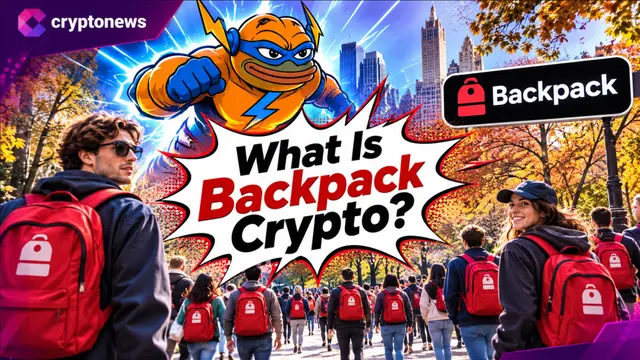
In parallel, the crypto exchange Backpack disclosed that it secured approval from the CFTC to operate as a designated contract market (DCM), a regulated futures exchange, and a derivatives clearing organization (DCO), which functions as the intermediary between buyers and sellers. Backpack presents this venue as the inaugural blockchain-based derivatives exchange within the United States.
The platform intends to facilitate leveraged crypto perpetual futures for American traders, alongside futures contracts that possess no expiration date, all matched within the same order book as its international exchange, and accessible twenty-four hours a day. Traders will have the option to use either fiat currency or cryptocurrency as margin, allowing them to offset their positions against one another.
Armani Ferrante, the founder of the company, indicated that this regulatory clearance represents the culmination of almost four years of dedicated effort. He shared that the initial construction of the exchange took place in Chicago before regulatory ambiguity necessitated a relocation outside of the United States. Ferrante conveyed on X that, "We were forced offshore, but we did know we wanted to build a new exchange from the ground up with the best of blockchains applied to a fully regulated financial institution." Furthermore, he asserted, "No tricks. No short cuts. No VPNs."
Ferrante also clarified that the enterprise does not plan to maintain distinct platforms for its domestic and global clientele; rather, the entire operation will function as "one American regulated exchange—for the entire world," operating on the CFTC-approved venue. The formation of this platform involved Ferrante, who previously worked at FTX, partnering with Claire Zhang and Can Sun, the former general counsel for the now-defunct exchange. At the time of its inception, the founders stated their intention to incorporate lessons learned from the collapse of FTX to safeguard user assets.
Earlier, CFTC Chair Michael Selig commented on the regulatory advancement, noting that "Blockchain technology presents another opportunity to modernize our financial markets and today’s approvals demonstrate that the CFTC’s regulatory framework remains well equipped to accommodate emerging technologies." The official statement also emphasized that these crypto-based businesses must adhere to the identical standards applied to their conventional counterparts, which includes mandates for customer protection, market surveillance, risk management, and anti-money laundering protocols.
In a separate development, the CFTC had previously confirmed a regulatory action on November 11, designating a subsidiary of tZERO as a DCM, following its DCO registration on October 16. These designations satisfy the initial earn-out benchmark in tZERO's planned merger with FG Imperii Acquisition Corp., a special purpose acquisition company (SPAC) deal executed on October 31. Moreover, Selig had previously announced earlier this month that perpetual futures on individual stocks are now permissible for trading on U.S. exchanges.
Mark Wetjen, president of Backpack US, stated in the company's official release that "from a policy perspective this is a really big deal," adding that placing blockchain-based infrastructure under U.S. supervision is crucial for shifting "price discovery from offshore unregulated venues to the United States." CEO Armani Ferrante reported that the company has expanded its presence into the United Arab Emirates, the European Union, Asia, and now the U.S., all while remaining "fully regulated from day one."
In terms of market reaction, Backpack's native token, BP, surpassed the $1.00 mark at the time of reporting. This represented a gain of over 20% within a twenty-four-hour span, alongside an 11% increase in value over a seven-day period. Nevertheless, BP remains 6% below its value from one month prior and is approximately 39% lower than its peak of $1.65, which was reached in early October. Furthermore, the recent news appears to have incited significant trading activity, with volume surging by 1,118% to reach $33 million, according to CoinGecko.
The approval signifies a maturation of regulatory acceptance for decentralized finance infrastructure within established financial jurisdictions. The integration of blockchain technology into regulated derivatives markets suggests a formal pathway for institutional participants to engage with novel financial primitives under established oversight.
Why it matters
This approval signals a significant shift toward bringing blockchain-based financial infrastructure under direct US regulatory oversight. For DeFi and L2 observers, this development validates the potential for regulated, institutional-grade derivatives markets on novel blockchain rails. The move could reshape how price discovery occurs in the crypto derivatives space.